How Can I Make Natural Cordage and Tools from Plants?
You can make natural cordage by harvesting fibrous plants like stinging nettle, dogbane, or yucca, extracting their inner fibers through crushing or retting, then twisting them into strong rope using a reverse wrap technique. For tools, shape sturdy plant parts such as mullein stalks into fire drills, weave cattail leaves into baskets, or lash branches together with your cordage to create spears or shelters.
Why Turn to Plants for Cordage and Tools?
People have relied on plants for these basics for thousands of years, from ancient hunters crafting bows to modern survivalists building emergency kits. It’s practical—plants are everywhere, renewable, and don’t require fancy equipment. In a pinch, like during a hike gone wrong, knowing this stuff can mean the difference between struggle and self-reliance. Plus, it’s satisfying to create something useful from what’s growing around you. This skill pops up in survival training, crafting hobbies, and even historical reenactments because it’s versatile and ties into broader ideas like sustainability and living off the land.
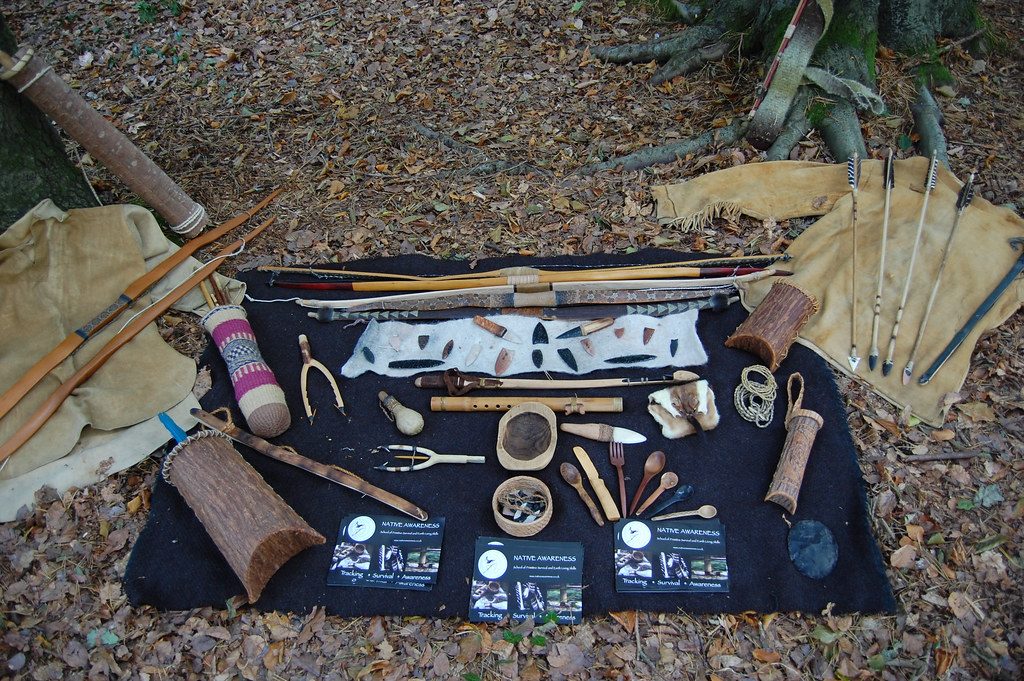
An array of primitive tools crafted from natural materials, including plant-based items like cordage, baskets, and drills.
The appeal comes from different angles. Survival enthusiasts love it for its no-tool simplicity, while gardeners see it as a way to use backyard plants creatively. Historians point out how early humans used plant fibers for everything from fishing nets to clothing, showing it’s not just a fad but a proven method. And with more folks interested in eco-friendly living, making your own rope beats buying plastic versions that harm the environment.
What Exactly Is Natural Cordage?
Cordage is just another word for rope or string made from twisted fibers. When it’s natural, it comes from plants instead of synthetics. The strength comes from long, flexible strands inside stems, leaves, or bark that lock together when twisted. Think of it like braiding hair—the more you twist, the tighter it holds.
This isn’t some obscure trick; it’s a core survival skill. In the wild, cordage lets you tie shelters, set traps, or even make fishing lines. Crafters use it for jewelry or baskets, and it’s popular in bushcraft circles because you can produce yards of it quickly with practice. The logic here is straightforward: plants provide free, abundant material that’s biodegradable and strong enough for real work, unlike flimsy alternatives.
Top Plants for Making Cordage
Not every plant works well, but many common ones do. Focus on those with tough, fibrous parts that don’t snap easily. Here’s a rundown of popular choices, drawn from what’s widely used in different regions. Each has its strengths, like ease of finding or extra toughness.
- Stinging Nettle (Urtica dioica): This weed grows almost everywhere, from backyards to forests. Its stems yield long fibers that make excellent rope. Native Americans favored it for bowstrings and nets because it’s durable yet flexible. Just wear gloves to avoid the sting—once processed, it’s harmless.
- Dogbane (Apocynum cannabinum): Related to hemp, this plant’s name hints at its fiber quality (“cannabinum” means fiber-plant). It’s a go-to in North America for strong cordage. Harvest dead stalks in fall for the best results; they’re easier to process then.
- Yucca (Yucca spp.): Desert dwellers swear by yucca’s leaves for their stiff, sharp fibers. It’s perfect for heavier rope and even needles. In the Southwest, it’s been used for centuries in baskets and sandals.
- Milkweed (Asclepias spp.): Similar to dogbane, its stems provide silky fibers. It’s common in fields and roadsides. Plus, the fluff inside pods is great for insulation, adding extra utility.
- Cattail (Typha spp.): The leaves make quick, braided cordage. They’re wetland plants, so easy to spot near water. Survival guides highlight them because they’re versatile—edible too.
Other options include inner bark from trees like willow or cedar, which give longer strands for bigger projects. The key logic? Pick plants that are local and abundant to avoid overharvesting. Test a small batch first to see how the fibers hold up.

Yucca fibers twisted into green cordage, showing a simple plant-based rope.
How to Prepare Plant Fibers for Cordage
Preparation turns raw plants into usable strands. Skip this, and your rope will fall apart. The process varies by plant, but the goal is separating tough fibers from softer parts.
Start by harvesting in late summer or fall when plants are mature and dry. For stems like nettle or dogbane, crush them gently with a rock or mallet to break the outer layer. Peel away the woody bits, leaving flexible fibers.
For bark, like from willow, cut strips from young branches and soak them. This is called retting—letting water or dew soften the material so fibers release easily. Dew retting means laying strips on grass for a week; water retting involves submerging in a stream. Both work because moisture breaks down pectin holding things together.
Leaves from yucca or cattail need less prep—just split them lengthwise and scrape off pulp. Dry the fibers afterward to prevent mold. This step’s logic is efficiency: well-prepped fibers twist smoother and last longer, saving time in the long run.
Step-by-Step: Crafting Your Own Cordage
Once fibers are ready, twisting them is straightforward. The reverse wrap method is popular because it’s quick and strong—no tools needed.
- Bundle and Split: Gather even-length fibers into a bundle about pencil-thick. Split into two equal groups.
- Start Twisting: Hold the bundle at one end. Twist each half clockwise tightly, then wrap one over the other counterclockwise. This locks them.
- Add More Fibers: As you go, splice in new strands by overlapping ends and twisting them in. Keep tension even.
- Finish Up: When long enough, tie a knot or loop the end. Test by pulling—it should hold firm.
For thicker rope, braid multiple strands together. Practice makes it faster; folks in survival videos churn out yards in minutes. The beauty here is adaptability—use it for lashing tools or even weaving nets.

Twisting strands of plant fiber to form rope, a key step in cordage making.
Turning Plants into Practical Tools
Cordage is great, but plants offer more for tools. Combine them with stones or bones for basics like knives or drills. This ties into primitive tech, where everything starts from nature.
- Fire Drills from Mullein: The tall, straight stalks make perfect spindles for bow drills. Dry them, then notch the base. One plant gives multiple fire-starting tools—leaves for tinder, too.
- Baskets from Cattails or Willow: Weave flexible leaves or branches into containers. Start with a base of crossed sticks, then over-under weave. They’re sturdy for carrying food or water.
- Spears or Arrows: Lash sharpened stones to straight branches using cordage. Plants like bamboo provide hollow shafts for blowguns.
- Traps and Snares: Use vines or cordage for nooses. Simple figure-four triggers from notched sticks catch small game.
These work because plants are lightweight and abundant. In survival scenarios, they bootstrap better tools—like using cordage to tie flint blades. Hobbyists enjoy this for the hands-on feel, while pros value the reliability.
Historical Roots of Plant-Based Crafting
Go back 20,000 years, and you’ll find evidence of plant cordage in caves. Neolithic folks used wooden tools to process fibers for ropes and textiles. Native groups like the Tuscarora, known as “Hemp Gatherers,” built their lives around Indian hemp for everything from bags to bows.
In the 19th century, hemp and manila from abaca plants dominated ropes for ships. This history validates the methods—they’ve stood the test of time because they’re effective and adaptable to local plants.
Safety First When Foraging and Working with Plants
Don’t rush in. Wrong plants can irritate skin or worse. Always identify positively—use guides or apps. Avoid areas near roads or sprays to dodge contaminants.
Wear gloves for stingy plants like nettle. Harvest sustainably—take only what you need, leave roots intact. If allergic, test a small patch on skin first. In the wild, watch for wildlife or uneven ground. This cautious approach keeps the fun in it without risks.
Taking It Further: Advanced Ideas
Once basics click, try netting for fishing or braiding for belts. Experiment with dyeing fibers using berries for color. Or scale up to larger ropes for hammocks. Communities online share twists, like using palmetto in Florida for local flavor. The logic? Building skills step by step leads to mastery, turning a simple rope into a gateway for more complex crafts.
Wrapping It Up
Making cordage and tools from plants connects you to nature in a real way. It’s empowering, whether for survival, fun, or history. Start small, practice often, and you’ll see how these age-old techniques still hold up today.