How to Identify Mushrooms: Your Ultimate Foraging Guide
Spotting mushrooms in the wild can spark curiosity, but getting it right matters a lot. To identify them accurately, start by noting where they grow—like on soil, wood, or trees—then check the cap’s shape, color, and texture. Look at the underside for gills, pores, or spines, examine the stem for rings or bases, make a spore print to see the color of spores, and cautiously sniff or taste a tiny bit if needed. Always cross-check with a trusted field guide or expert before assuming anything is safe to eat.
Why Bother Learning Mushroom Identification?
Mushrooms pop up everywhere, from backyard lawns to deep forests, and knowing how to identify them opens up a world of possibilities. Foragers love the thrill of finding edibles like chanterelles or morels, which can turn a simple hike into a gourmet adventure. Beyond food, mushrooms play key roles in ecosystems, breaking down dead matter and partnering with trees for nutrient exchange. But here’s the logic: misidentification can lead to serious health risks, so building this skill protects you while enhancing your outdoor experiences. Popular interest has surged with books like “Entangled Life” by Merlin Sheldrake, inspiring more people to explore fungi responsibly.
Interest in mushroom foraging has grown, with a 2023 survey from the North American Mycological Association showing over 1 million active foragers in the U.S. alone. This rise ties into trends like wild food movements and nature therapy, where identifying mushrooms fosters mindfulness and connection to the environment.
Grasping Mushroom Anatomy: The Building Blocks
Before diving into identification, get familiar with a mushroom’s parts. Think of it as piecing together a puzzle—each feature gives clues about the species.

Diagram showing key parts of a mushroom, including cap, gills, stem, and mycelium.
- Cap (Pileus): This top part varies wildly—round, flat, conical, or wavy. Colors range from bright red to dull brown, and textures might be smooth, scaly, or slimy. Why does this matter? Caps often change with age or weather, so noting details helps distinguish look-alikes.
- Gills, Pores, or Teeth (Hymenium): Under the cap, you’ll find structures for spore release. Gills are blade-like, pores are like tiny tubes in boletes, and teeth hang down in some species. Attachment to the stem—free, attached, or running down it—is a big identifier.
- Stem (Stipe): Check if it’s thick, thin, hollow, or solid. Look for a ring (annulus) or cup-like base (volva), remnants from protective veils in young mushrooms. These features are crucial because poisonous types like death caps have them.
- Other Traits: Bruising color when cut, smell (earthy, fruity, or foul), and base structure round out the picture. Logic here: mushrooms aren’t static; observing multiple angles avoids mistakes, as many species mimic others superficially.
This foundational knowledge makes sense because fungi diversity exceeds 14,000 described species in North America, per the Mycological Society of America, demanding precise observation.
Tools You’ll Need for Effective Identification
You don’t need fancy gear to start, but a few basics make the process smoother and more accurate.
- Field Guide: Grab a regional one like “Mushrooms Demystified” by David Arora. These books organize by features like spore color, making lookups quick.
- Magnifying Glass: For close-ups on tiny details like gill spacing or spore patterns.
- Knife and Basket: A sharp knife for clean cuts and a breathable basket to carry finds without squishing them.
- Notebook and Camera: Jot notes on habitat and snap photos from all angles—top, bottom, side, and cross-section. As one Reddit user noted in a popular mycology thread, good photos can get you to genus level fast on forums.
Why these tools? They turn casual spotting into systematic study, reducing guesswork. Apps like iNaturalist complement them but aren’t foolproof, as community feedback often highlights.
Step-by-Step Process: How to Identify Mushrooms in the Field
Follow these steps every time to build confidence. It’s like detective work—gather evidence methodically.
Step 1: Observe the Habitat
Where the mushroom grows is your first clue. Is it on decaying wood, like oyster mushrooms on logs? Or in grassy fields, common for meadow types? Some thrive under specific trees—chanterelles near oaks, for example. This matters because ecology narrows options; boletes often pair with pines, while others favor hardwoods.
Step 2: Examine Overall Shape and Size
Note if it’s gilled, pored, or something else. Measure cap width and stem height. Young mushrooms look different from mature ones, so check nearby for variations.
Step 3: Inspect the Cap and Underside
Feel the cap—is it dry or sticky? Flip it over: Count gill spacing (crowded or distant) and color. For boletes, press pores to see if they bruise blue.
Step 4: Check the Stem and Base
Look for rings, volvas, or bulbs. Cut lengthwise to see if it’s hollow. Bruise tests reveal color changes, like red in some boletes.
Step 5: Make a Spore Print
This simple test is gold for identification. Place the cap gill-side down on paper (half white, half black for visibility), cover with a bowl, and wait 4-24 hours. Spore color—white, pink, brown, or black—guides you in field books.
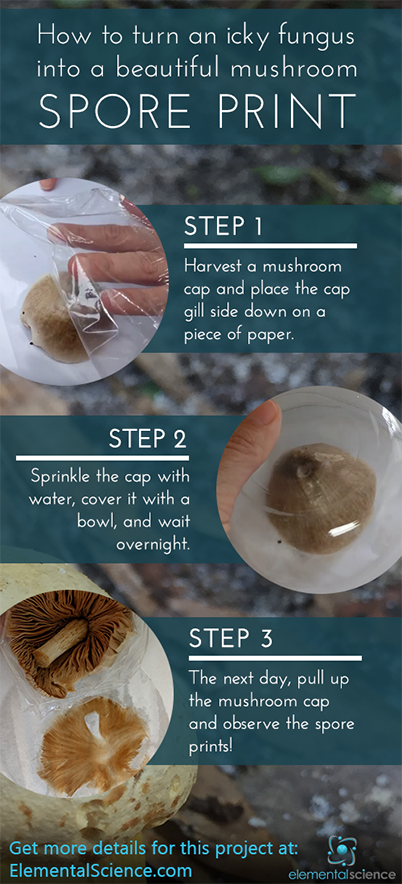
Step-by-step guide to creating a spore print from a mushroom.
Step 6: Note Sensory Details
Sniff for scents like apricot in chanterelles or mealy in some toxic ones. If experienced, taste a speck and spit it out—bitter often signals caution.
Step 7: Consult Resources and Experts
Cross-reference with guides or apps. Join local mycological societies for forays; their expertise prevents errors.
This process works because it layers observations, mirroring how pros like those at the Holden Arboretum approach it. Skipping steps invites confusion, especially with look-alikes.
Popular Edible Mushrooms: What to Look For
Once comfortable with basics, target these common edibles. Remember, confirm with experts before eating.
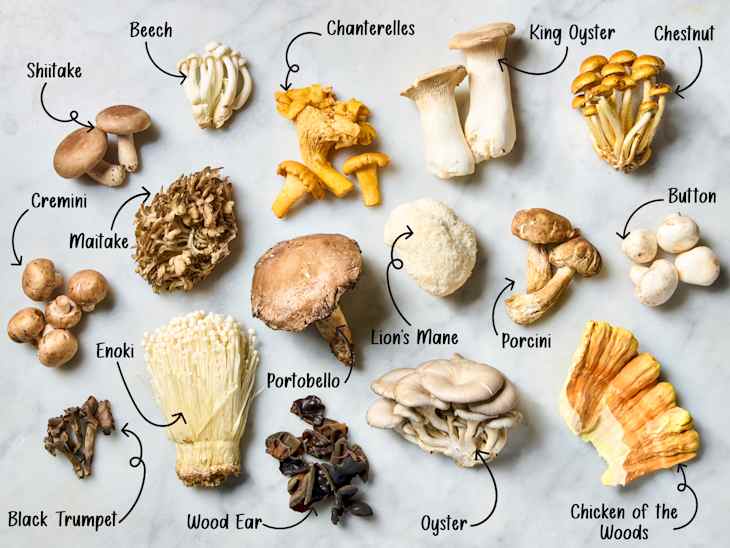
Chart of various common edible mushrooms with labels.
- Chanterelles (Cantharellus cibarius): Golden-yellow, vase-shaped with ridged false gills running down the stem. Fruity apricot smell. Grow in mossy forests. Popular for their peppery flavor in dishes.
- Morels (Morchella spp.): Honeycomb-like caps on hollow stems. Spring favorites in burned areas or under elms. Always cook them to avoid mild toxins.
- Oyster Mushrooms (Pleurotus ostreatus): Fan-shaped, white to gray caps growing on trees. Mild, anise-like scent. Easy for beginners due to no poisonous look-alikes in most regions.
- Chicken of the Woods (Laetiporus sulphureus): Bright orange shelves on oaks. Meaty texture mimics chicken. Harvest young for best taste.
- Lion’s Mane (Hericium erinaceus): White, shaggy teeth hanging like icicles. On hardwoods, tastes like seafood.
These are favorites because they’re widespread and flavorful, with foraging communities raving about them on sites like Forager Chef. But logic dictates starting small—edibles make up only about 10% of wild mushrooms, per expert estimates.
Spotting Dangerous Ones: Common Poisonous Mushrooms
Knowing what to avoid is as vital as finding keepers. These can cause anything from stomach upset to fatality.
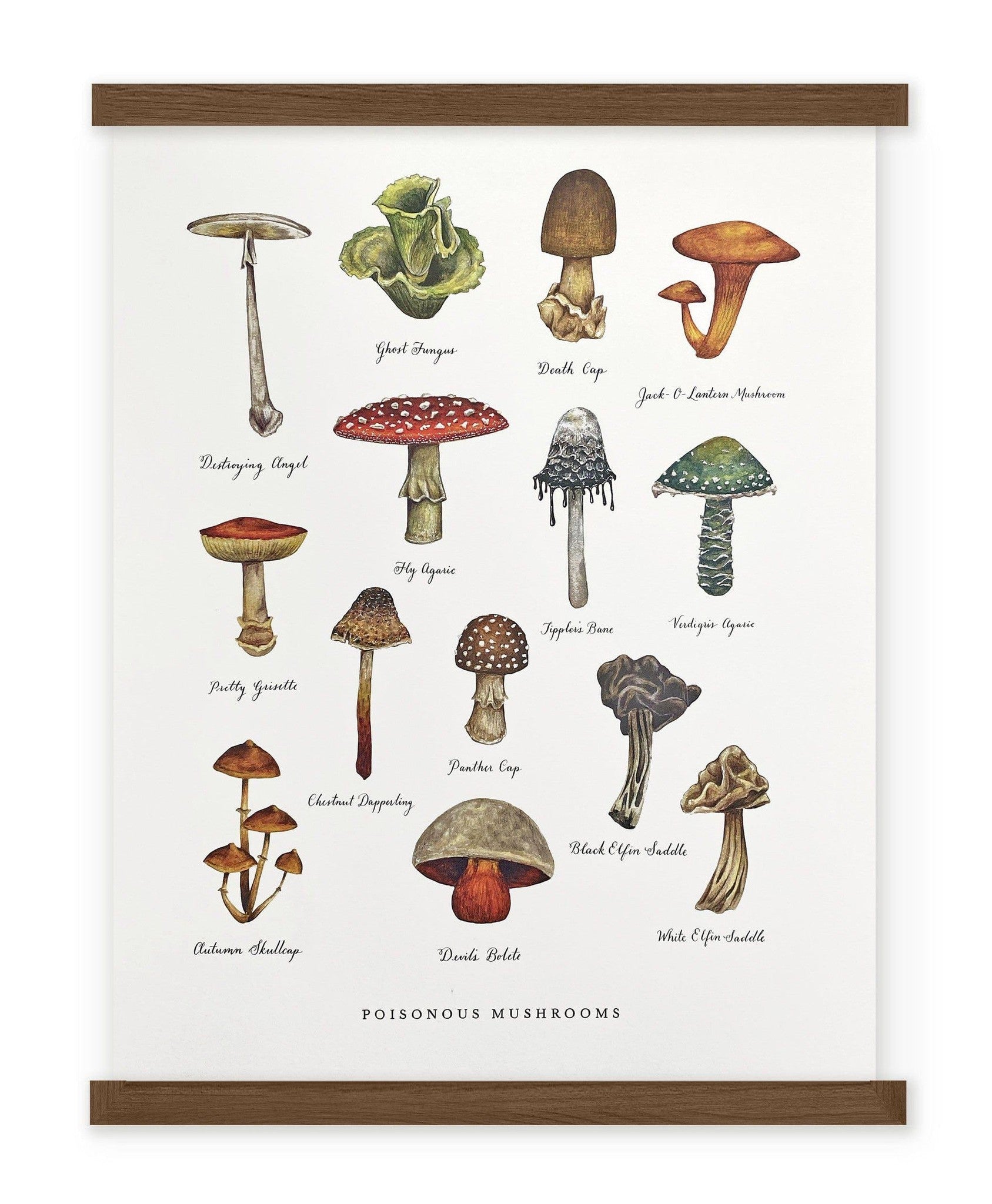
Illustrated chart of common poisonous mushrooms.
- Death Cap (Amanita phalloides): Greenish cap, white gills, skirt-like ring, and volva at base. Grows under oaks. Responsible for most mushroom fatalities—symptoms delay 6-12 hours.
- Destroying Angel (Amanita bisporigera): Pure white, with ring and volva. In forests, causes liver failure.
- Jack O’Lantern (Omphalotus illudens): Orange, gilled clusters on wood. Glows faintly, mimics chanterelles but causes vomiting.
- Autumn Skullcap (Galerina marginata): Small, brown, on rotting wood. Contains amatoxins like death caps.
- Fly Agaric (Amanita muscaria): Iconic red cap with white spots. Hallucinogenic but toxic, causing delirium.
These earn notoriety because they resemble edibles—jack o’lanterns fool chanterelle hunters. Britannica reports death caps cause 90% of mushroom deaths worldwide, underscoring the need for vigilance.
Safety First: Tips to Avoid Risks
Foraging safely isn’t optional. Wash hands after handling, as some toxins absorb through skin. Never eat raw mushrooms; cooking neutralizes many issues. If unsure, throw it out—better safe than sorry. Join guided walks; the Ohio Mushroom Society hosts events where pros teach hands-on.
Kids and pets? Keep them away, as even non-toxic ones can upset stomachs. If poisoning suspected, call poison control immediately. This approach makes sense because statistics from the American Association of Poison Control Centers show thousands of exposures yearly, mostly preventable with education.
Apps, Books, and Communities: Modern Resources
Tech boosts identification. iNaturalist uses AI and community input for suggestions, though not 100% reliable. Mushroom Observer lets you upload photos for feedback. Books like “National Audubon Society Field Guide to Mushrooms” are staples.
Online forums on Reddit’s r/mycology share real-time tips. Why popular? They democratize knowledge, but always verify with multiple sources.
Wrapping Up: Embrace the Hunt with Care
Identifying mushrooms blends science, adventure, and caution. Start slow, learn from mistakes, and soon you’ll spot patterns effortlessly. Whether for food, fun, or fascination, this skill enriches time outdoors. Remember, nature’s bounty comes with responsibility—happy foraging!