How Do I Survive in the Wilderness with No Gear?
To survive in the wilderness without any gear, focus on these core steps right away: stay calm to think clearly, build a basic shelter using leaves and branches to protect from weather, find and purify water from streams or by collecting dew, start a fire with friction methods like a hand drill for warmth and cooking, forage for edible plants while avoiding risky ones, navigate using the sun or stars to head toward civilization, and signal for help with smoke or ground markers to increase rescue chances.
Why Wilderness Survival Skills Matter Today
People end up in survival situations more often than you might think, whether from a hiking mishap, a vehicle breakdown in remote areas, or unexpected weather changes. Knowing how to handle yourself without tools draws from age-old bushcraft techniques that indigenous groups and explorers have relied on for centuries. These skills aren’t just for extreme adventurers; they’re practical knowledge that can turn a scary ordeal into a manageable one. Popular survival shows and books highlight real stories where quick thinking and resourcefulness made the difference between life and death. The logic here is simple: nature provides what you need if you know where to look and how to use it safely.
Preparation starts before you ever step into the wild. Practice these techniques in safe settings, like your backyard or a local park, to build confidence. Statistics show that most lost hikers are found within 24 hours if they stay put and signal effectively, according to search and rescue data from the National Park Service. Rushing around without a plan often leads to exhaustion or injury, so logic dictates conserving energy and prioritizing immediate needs.
Setting Priorities: The Rule of Threes
In any survival scenario, remember the Rule of Threes: you can survive about three hours without shelter in harsh weather, three days without water, and three weeks without food. This guideline helps you decide what to tackle first. Shelter comes before water in cold or wet conditions because hypothermia kills faster than dehydration. In hot climates, water jumps to the top. The reasoning is rooted in how the body responds to extremes—losing heat or fluids too quickly shuts down vital functions.
- Assess your environment: Look at the weather, terrain, and available materials. Flat, dry ground near water but away from hazards like flash floods is ideal.
- Stay put if possible: Moving aimlessly wastes energy. Unless you’re sure of a quick exit, hunker down and make your spot work.
- Gather resources early: Collect what you need while you have daylight and strength.
This approach has been validated in countless real-world cases, like hikers who survived by focusing on one task at a time rather than panicking.
Building Shelter: Your First Line of Defense
Shelter protects you from rain, wind, cold, and sun, which can sap your strength fast. Without it, exposure becomes your biggest enemy. Popular methods emphasize using what’s around you, like fallen branches and leaves, because they’re abundant and require no tools. The logic is that a good shelter traps body heat and blocks elements, buying you time to handle other needs.
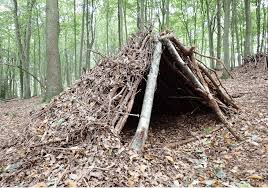
A simple debris hut made from branches and leaves.
The Debris Hut: Simple and Effective
One of the most reliable options is the debris hut, a classic bushcraft design. Find a sturdy ridgepole—a long branch about your height plus a foot—and prop one end against a tree or rock at a 45-degree angle. Lean smaller branches against it to form a frame, then pile on leaves, grass, or pine needles at least two feet thick for insulation. Crawl inside feet-first to minimize heat loss.
Why does this work? The thick layer of debris acts like a blanket, trapping air that warms from your body heat. It’s quick to build—often in under an hour—and blends into the environment, which can help if wildlife is a concern. Videos from survival experts show this hut holding up in snow or rain, proving its durability.
Other Natural Shelter Ideas
If debris is scarce, look for natural formations. A fallen tree with roots exposed can become a windbreak; pile dirt or snow against it for walls. In deserts, dig a trench and cover it with brush to escape the sun. Caves offer ready-made protection but check for animals first. Each method adapts to the terrain, ensuring you use minimal effort for maximum cover.
- Tips for success: Elevate your sleeping area with leaves to avoid ground chill. Face the opening away from wind. Test for stability before settling in.
These techniques have saved lives in stories from places like the Appalachian Trail, where hikers built hasty shelters during storms.
Finding and Purifying Water: Stay Hydrated to Stay Alive
Water is crucial because dehydration hits hard, clouding your judgment and weakening your body. Without gear, focus on natural sources and simple purification. Rivers and streams are popular go-tos since they’re often visible and flowing, reducing stagnation risks. The logic: moving water is usually cleaner than still pools, but always treat it to avoid parasites.

A solar still setup to collect clean water.
Locating Water Sources
Head downhill—water flows to low points. Look for green vegetation, animal tracks, or birds circling, as they signal nearby moisture. In dry areas, dig in damp soil or follow dry riverbeds to potential underground pockets. Morning dew on leaves can be licked or collected with cloth if you have any fabric from clothing.
Purification Without Tools
Boiling is best, but that needs fire (covered next). If not, build a solar still: dig a hole, place green plants or urine in the center, cover with plastic (or large leaves if none), and weigh down edges with rocks. Put a stone in the middle to create a dip; sunlight evaporates moisture, which condenses and drips into a container below. This method yields small amounts but is passive, letting you work on other tasks.
- Daily needs: Aim for at least a liter per day, more in heat. Sip slowly to absorb better.
- Warnings: Avoid salty or contaminated water; it worsens dehydration.
Experts note that in arid regions, this has kept people going for days until rescue.
Starting a Fire: Warmth, Cooking, and Morale Booster
Fire provides heat, cooks food, purifies water, and scares off animals. Without matches, friction methods are the way forward, popular in bushcraft circles for their reliability once mastered. The hand drill, for instance, uses spinning wood to create embers. Logic: friction generates heat that ignites tinder, starting a chain reaction to build flames.
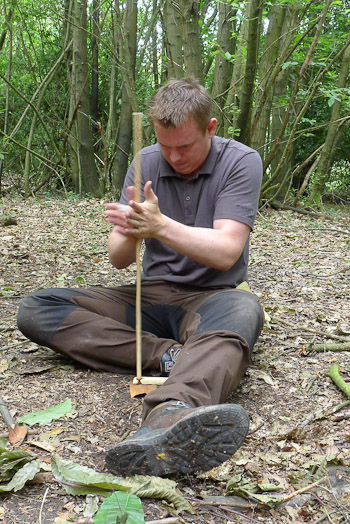
Demonstrating the hand drill fire-starting method.
Friction Fire Techniques
Gather dry materials: a softwood baseboard with a notch, a hardwood spindle, and fine tinder like grass or bark. Roll the spindle between your palms while pressing down into the board; the friction creates a hot ember to blow into flame. Practice makes this easier—many fail at first due to wet wood or poor form.
A bow drill amps it up: fashion a bow from a curved branch and cordage (twisted plant fibers), wrap the spindle, and saw back and forth. This is faster and less tiring.
Fire Maintenance
Start small with tinder, add kindling, then fuel wood. Keep it going at night for safety. In wet conditions, look under logs for dry stuff.
- Safety first: Clear a pit to contain it. Never leave it unattended.
Real accounts, like those from winter survivors, show fire as a game-changer for morale and health.
Sourcing Food: Forage Wisely
Food isn’t urgent, but it sustains energy. Foraging for plants is safer and easier than hunting without tools. Popular edibles include dandelions and cattails, found widely and nutritious. The logic: plants don’t run away, and identifying a few safe ones prevents starvation risks.

Common edible plants like dandelions and cattails.
Edible Plants to Know
Dandelions: Eat leaves raw or boiled; full of vitamins. Cattails: Roots like potatoes, shoots like cucumber. Pine needles make tea for vitamin C. Test small amounts first to avoid reactions.
Basic Hunting and Trapping
Set snares from plant cordage for small game, or sharpen sticks for spears. Insects like grubs provide protein quickly.
- Rules: Only eat what you’re sure of. Universal edibility test: rub on skin, wait, then taste.
- Portions: Small meals conserve digestion energy.
Foragers report that in temperate areas, you can find enough to survive weeks if selective.
Navigation: Finding Your Way Out
Getting lost compounds problems, so navigate using nature’s cues. The sun rises east and sets west; stars guide at night. Popular for reliability without tech. Logic: Consistent patterns like the sun’s path provide direction, helping you aim for roads or rivers.

Using the North Star for direction.
Daytime Methods
Stick shadow: Place a stick upright; mark the shadow tip, wait 15 minutes, mark again. Line points east-west. Moss grows on north sides of trees in northern hemispheres.
Nighttime Stars
Find the Big Dipper; line from its front points to Polaris, true north. In south, use the Southern Cross.
- Travel tips: Follow streams downstream to civilization. Avoid circles by picking landmarks.
Backcountry experts swear by these for off-trail hikes.
Signaling for Help: Get Noticed
Rescue often comes if you signal well. Smoke by day, fire by night are classics. Logic: Visibility from air or ground draws attention without much effort.
Ground and Visual Signals
Arrange rocks or logs into SOS or large X in clearings. Three fires in a triangle is a distress signal.
Sound and Light
Whistle three blasts; repeat. Flash sunlight with shiny surfaces like wet leaves.
- Persistence: Keep signals active. Most rescues happen via air search.
Survival tales emphasize this as the key to quick extraction.
Health and Safety: Avoid Injuries
Watch for hazards like poisonous plants, insects, or terrain slips. Treat cuts with clean cloth; elevate injuries. Logic: Prevention keeps you functional longer.
- Hygiene: Wash with water to avoid infection.
- Wildlife: Make noise to deter animals; store food away.
Common issues like blisters slow you down, so address early.
Mental Strength: The Real Survival Tool
Panic leads to bad choices, so stay positive. Break tasks into steps; recall past successes. Logic: A clear mind solves problems better than a frantic one.
- Techniques: Breathe deeply, focus on now. Sing or talk to yourself for company.
Studies show mental resilience extends survival time significantly.
Common Mistakes and How to Dodge Them
Don’t ignore shelter—exposure kills fast. Avoid drinking unpurified water or eating unknown plants. Panicking and wandering aimlessly is a top error. Logic: Staying methodical preserves resources.
- More pitfalls: Overexertion, ignoring weather changes.
Learning from others’ errors, like those in rescue reports, sharpens your edge.
Wrapping It Up: Build Skills Now
Surviving gear-free boils down to knowledge and calm action. Practice these, tell someone your plans, and carry basics when possible. Nature tests you, but with these tools, you stand a strong chance. Stay safe out there.